Charcoal Radon Test Kits Explained
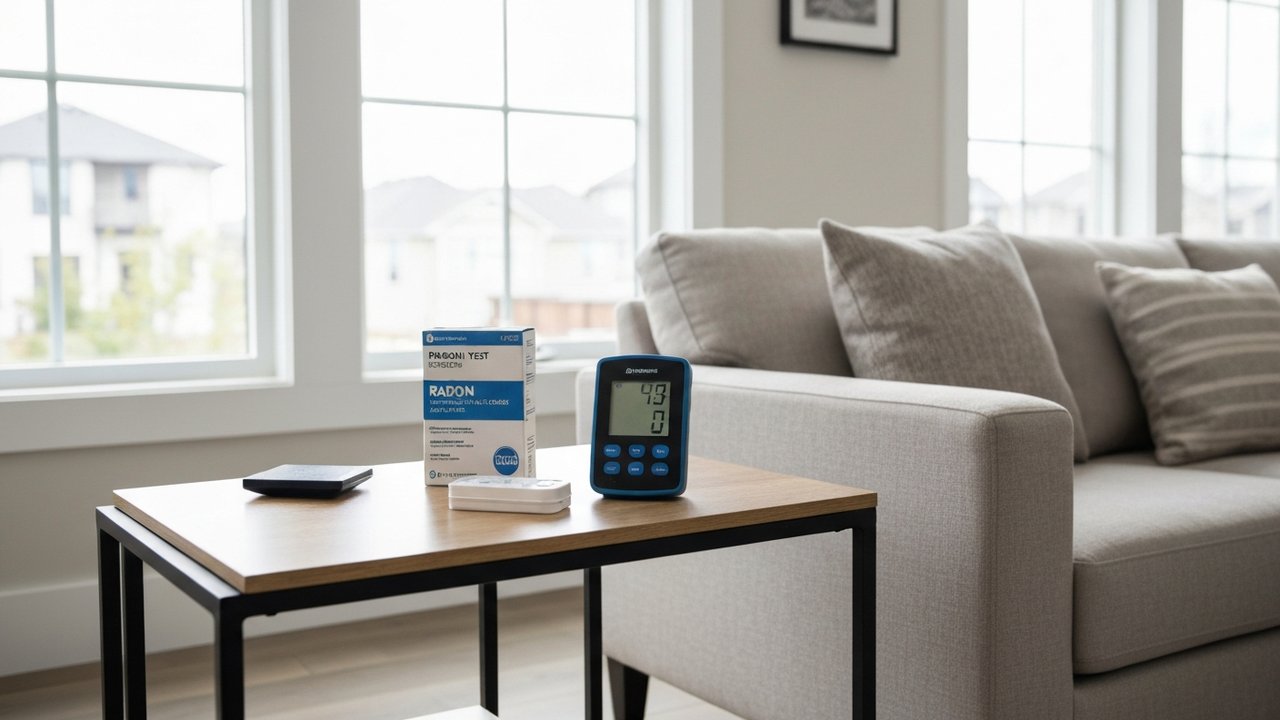
What a charcoal radon test kit actually is
An activated charcoal canister is a passive device: no power, no batteries, no active sampling pump. Inside is a bed of activated carbon, a porous material with an enormous surface area relative to its size. As air moves naturally past the canister, radon molecules stick to that carbon through a process called adsorption.
Most kits measure between two and seven days. After exposure, you seal the canister, fill out a chain-of-custody form, and mail it to an accredited laboratory. The lab counts the gamma radiation emitted by radon and its decay products still trapped in the carbon, then calculates the average radon concentration in the air during your test window and reports it in pCi/L.
One detail worth knowing: activated charcoal is sensitive to humidity, and high moisture can reduce accuracy. That is why you should not place the canister in an unusually damp crawl space or directly next to a laundry sink. Also, radon continues to decay after you seal the kit, so labs require you to note the exact start and end times of the test since they factor elapsed time into their calculation. A kit mailed Monday with no timestamps on the form is a kit with no valid result.
Placement and closed-house conditions
Where you put the canister matters as much as the kit itself.
Place it in the lowest area of the home that you occupy regularly. A finished basement with a bedroom or office is the right spot, not a utility room you visit for ten minutes a week. If your home has no basement, test on the ground floor away from exterior walls and drafts. Set the canister on a table or shelf between two and six feet off the floor, not on the floor itself. Keep it away from exterior doors, windows, fireplaces, and HVAC supply or return vents. The goal is to measure the air your household actually breathes.
The EPA requires closed-house conditions during a short-term charcoal test. That means keeping windows and exterior doors closed (except for normal entry and exit) for at least twelve hours before the test starts and throughout the entire test period. Running window air conditioners or whole-house fans that draw outside air defeats the purpose and will produce an artificially low reading, giving you false confidence about a real problem.
One common mistake is opening windows on a nice day mid-test and forgetting to note it. If that happens, stop the test, seal the kit, record a note that conditions were compromised, and start a fresh test when you can commit to full closed-house conditions.
What charcoal kits can tell you, and what they cannot
Charcoal tests are excellent at one thing: giving you a fast, inexpensive read on whether radon may be elevated in your home. They work well for a first-time screening, for real estate transactions where results are needed quickly, and for confirming that a mitigation system brought levels down after installation.
They are not designed to calculate your annual average exposure. Radon concentrations fluctuate by season, weather pattern, and even time of day. A charcoal test captures a snapshot of two to seven days, which may not represent what the home looks like in February compared to August. That variability is not a flaw in the canister; it is just the nature of short-term measurement.
For a more accurate picture of long-term exposure, an alpha track detector run for 90 days to a full year gives a much more representative annual average. The short-term vs. long-term radon tests comparison covers when each approach makes sense. For most homeowners, a charcoal test is still the right first step. If it comes back below 2 pCi/L, retest every two to five years and move on. If it comes back at 4 pCi/L or higher, the EPA recommends confirming with a follow-up test before committing to mitigation costs.
The U.S. Surgeon General has issued a national health advisory urging all Americans to test their homes for radon. A charcoal canister is the simplest way to answer that call.
Reading your results
Your lab report will list the radon concentration in pCi/L. Here is what the numbers mean in practice.
Below 2 pCi/L is reassuring. The average indoor radon level across US homes runs around 1.3 pCi/L, so a result in this range puts your home at or near typical.
Between 2 and 4 pCi/L is a gray zone. The EPA says to consider action here, though it does not require it. If someone in the household smokes, or if the tested space is heavily used, reducing levels toward 2 pCi/L is worth discussing with a certified contractor. Radon and tobacco smoke together cause far more lung cancer risk than either does alone.
At 4 pCi/L or higher, the EPA action level, the guidance is clear: take action. That does not mean calling a mitigator the same afternoon. A single charcoal test carries some inherent variability, so the usual recommendation is to confirm with a second short-term test or a long-term test before spending money on a system, unless the reading is very high (above 8 to 10 pCi/L), in which case most experts advise skipping the confirmation and moving directly to mitigation.
For comparison, Health Canada’s guideline is 200 Bq/m3 (roughly 5.4 pCi/L), and the World Health Organization sets a reference level of 100 Bq/m3 (about 2.7 pCi/L). Different thresholds reflect different policy balances, but the underlying science is consistent: lower is better, and elevated levels are worth reducing.
Where to get a charcoal test kit
Start with your state radon program. Many states partner with accredited labs to offer free or subsidized kits to residents, and some run periodic giveaways through local health departments and home improvement stores. Our guide to free radon test kits covers what is available by state, including how to request one by mail.
Hardware stores carry charcoal kits from brands like Air Chek and Accustar, typically in the $15 to $25 range with the lab fee included. Online retailers carry the same options and sometimes offer better prices on two-pack or three-pack orders, which can be useful if you want to test the basement and the ground floor simultaneously for comparison.
When buying online, confirm two things: the kit includes a prepaid return mailer, and the lab is accredited through the AARST-NRPP (or C-NRPP for Canadian residents). Unaccredited labs do exist, and their results may not satisfy state requirements or satisfy a real estate lender requesting documentation. Check price on Amazon
For a broader comparison of charcoal kits versus electronic monitors and alpha track detectors, see the best radon test kits roundup.
FAQ
Can I reuse a charcoal radon test kit? No. Once exposed to air, the charcoal has adsorbed radon and cannot be reset or recharged. Each canister is a single-use device. If you need to test again, open a fresh kit.
How long does it take to get results? After sealing and mailing the canister, most accredited labs turn results around within two to five business days of receiving the kit. Add a couple of days of transit each way and you are typically looking at one to two weeks from when you start the test to when results arrive. Some labs offer expedited processing for a small additional fee if you need results sooner, for example during a home sale.
Does the time of year affect a charcoal test result? Yes, somewhat. Radon levels in many US homes tend to run higher in winter, when windows stay shut and soil is frozen above the foundation. Testing during a stretch of warm weather with windows open can produce results that are lower than your typical year-round exposure. For the most representative short-term result, test during a period of normal, closed-house living. If you want a true annual average, a long-term alpha track test is more reliable.
What if my charcoal test comes back right at 4 pCi/L? A result at the EPA action level is worth taking seriously. Because a single short-term test has some inherent variability, most experts recommend confirming with a second test before investing in mitigation. Run another short-term kit or a 90-day alpha track test and average the two results. If the average stays at or above 4 pCi/L, consult a contractor certified through AARST-NRPP for an assessment.
Not sure where your home stands? Try the free Radon Risk Calculator to see what your level means and what to do next.
Related guides
How Much Does a Radon Test Kit Cost?
A plain-English breakdown of what radon test kits actually cost, from free state programs to charcoal canisters, alpha-track kits, and professional testing.
Read the guide →How to Use a Radon Test Kit Correctly
Step-by-step instructions for using a short-term charcoal radon test kit correctly, from closed-house conditions to mailing the sample to the lab.
Read the guide →Radon Testing for New Construction Homes
Why new construction homes aren't automatically radon-free, when to test, and what to do if your RRNC-equipped home still reads above 4 pCi/L.
Read the guide →The only way to know your radon level is to test
Radon is invisible and odourless, and the only way to know your home's level is a test. An inexpensive home test kit is the simplest place to start. See our picks and how to read the result.
See the best radon test kits →