How to Test Your Home for Radon (Step by Step)
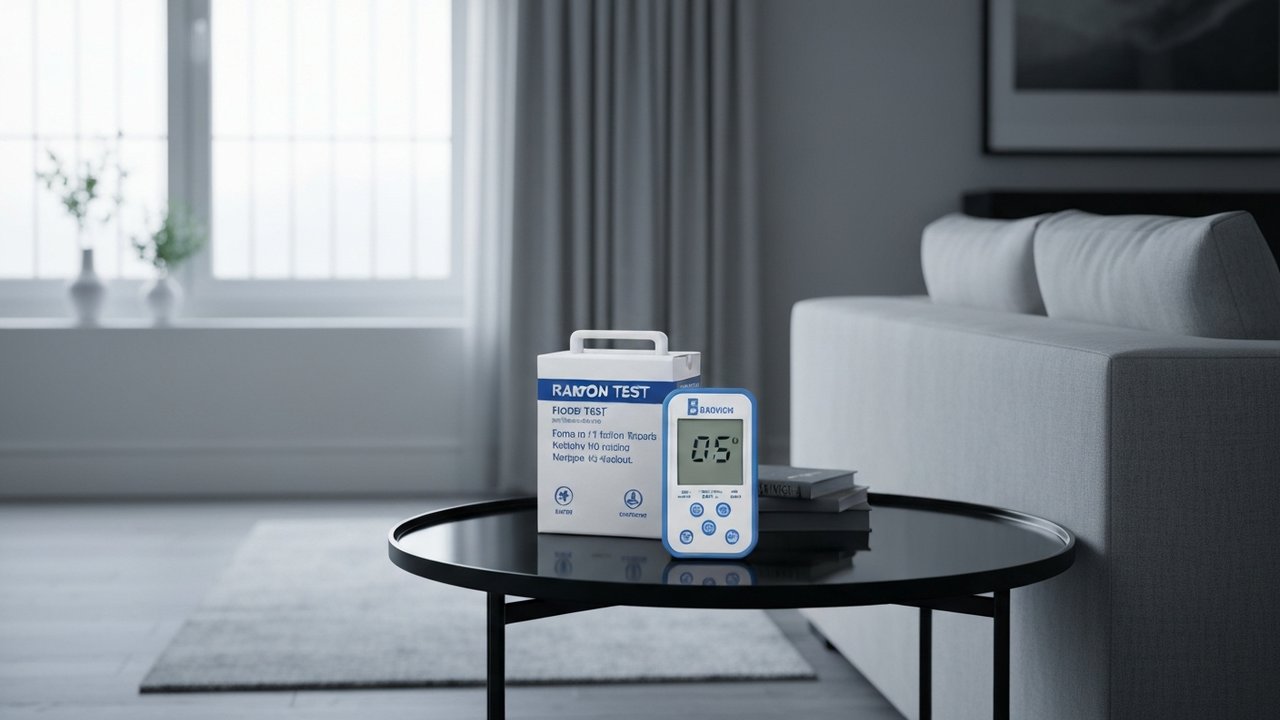
Pick the right type of radon test
There are three common ways to measure radon, and each fits a different situation.
Short-term tests (2 to 7 days). These usually use activated charcoal or activated carbon to absorb radon while the device sits in your home. They are cheap, fast, and widely sold. The trade-off is that radon levels swing a lot from day to day and season to season, so a snapshot of a few days is only a rough first look. Use a short-term test when you need an answer quickly, such as during a real estate transaction, or as a simple screen to see whether you should test further.
Long-term tests (90 days or more). These typically use an alpha-track detector, a small piece of plastic film that records damage from radon particles over time. Because they run for months, they capture the natural ups and downs and give a far better estimate of your true year-round average. Health Canada calls for a minimum of 91 days and recommends 3 to 12 months for an accurate annual average. Use a long-term test when you want the most reliable picture and you are not in a hurry.
Continuous digital monitors. These plug-in or battery devices show radon readings on a screen and log them over hours, days, and months. A quality monitor lets you watch trends, retest for free, and confirm that a mitigation system is working. They cost more up front than a single mail-in kit. Use one if you want ongoing visibility rather than a one-time number.
For help choosing, see our guide to the best radon test kits.
Where to place the test
Placement decides whether your result is trustworthy. Follow the protocols used by the EPA and AARST-NRPP, the body that sets U.S. radon measurement standards.
- Test the lowest lived-in level. Measure the lowest floor you use regularly, such as a finished basement, a basement bedroom, or a ground-floor room. Skip crawl spaces and rooms you never occupy.
- Set it at breathing height. Place the device 2 to 6 feet above the floor, never on the floor itself.
- Keep it away from disturbances. Stay at least 3 feet from windows, exterior doors, and vents, and at least a few inches off exterior walls.
- Avoid drafts and humidity. Do not put a charcoal kit in a kitchen, bathroom, or laundry room, or near a fireplace, heater, or fan. High humidity and air movement throw off charcoal results.
- Leave it undisturbed. Pick a spot where pets, kids, and daily traffic will not bump or move it.
Run a short-term test correctly
If you are using a short-term charcoal or carbon kit, closed-house conditions matter:
- Close up the house 12 hours before you start. Keep windows and exterior doors shut except for normal quick entry and exit. Run heating and air conditioning as usual, but turn off whole-house fans and keep fireplace dampers closed.
- Keep it closed for the whole test. Maintain those conditions for the full 2 to 7 days.
- Note start and stop times. Many labs ask for exact placement and pickup times on the kit.
- Mail it the same day you finish. Charcoal continues to absorb and release radon, so send mail-in kits to the lab promptly. The lab analyzes the device and reports your pCi/L result.
Long-term alpha-track tests do not require closed-house conditions, because they already average over normal living over months.
How to read your result
In the United States, the EPA recommends taking action to reduce radon if your level is 4 pCi/L or higher. The EPA also notes there is no fully safe level, and you may choose to reduce levels between 2 and 4 pCi/L. In Canada, Health Canada’s guideline is 200 Bq/m3 as an annual average (about 5.4 pCi/L). These are averages, not single readings, which is why confirmation matters.
Confirm a high result before you fix anything
A single short-term test is a screen, not a verdict. Before paying for a mitigation system, confirm a high reading:
- If a short-term test comes back at 4 pCi/L or higher, run a follow-up test. The EPA suggests a second short-term test or, better, a long-term test.
- If your first reading is well above the action level and you want a fast decision, a second short-term test is acceptable. If it is closer to the line, a long-term test gives the most accurate average.
- If the long-term follow-up is 4 pCi/L or higher, the EPA recommends fixing the home.
Confirming protects you from acting on an unusually high or low few days. When you are ready to fix a confirmed problem, see what to expect in our radon mitigation cost guide.
When to test (and retest)
- After buying a home, or during the purchase itself. Real estate tests should generally use a certified measurement professional and follow stricter protocols.
- Every 2 years for ongoing peace of mind, since levels change over time.
- After major renovations or foundation work, including new windows, a new HVAC system, or anything that changes how your home breathes.
- After installing a mitigation system, to confirm it brought levels down, and periodically afterward to confirm it keeps working.
Curious why all of this matters? Start with what radon is and whether it is dangerous.
Where to get a test kit
- Check your state radon program first. Many state health departments offer free or low-cost kits. The National Radon Program Services hotline (1-800-SOS-RADON) can point you to local resources.
- Buy retail or online. Hardware stores and online retailers like Amazon sell short-term kits, long-term kits, and digital monitors. Choose a kit whose lab analysis is included in the price.
- Hire a certified professional for real estate transactions or when you want an expert to handle placement and reporting. Look for a measurement provider certified by AARST-NRPP.
FAQ
How accurate is a cheap charcoal radon kit? A charcoal kit gives a useful first reading when you follow closed-house conditions and placement rules and mail it to the lab promptly. It is a short snapshot, though, so confirm any result at or above 4 pCi/L with a second test or a long-term test.
Should I use a short-term or long-term test? Use a short-term test when you need a fast answer, such as a home sale. Use a long-term test (91 days or more, per Health Canada) when you want the most accurate estimate of your year-round average, which is what your health risk actually depends on.
What radon level is too high? The EPA recommends action at 4 pCi/L or higher and notes no level is risk-free. Health Canada’s guideline is 200 Bq/m3 as an annual average. Both refer to long-term averages, not a single day’s reading.
Where in my house should I put the test? On the lowest level you regularly use, at 2 to 6 feet above the floor, at least 3 feet from windows and doors, away from exterior walls, drafts, and humid rooms like bathrooms. Learn more about choosing devices on our homepage.
Not sure where your home stands? Try the free Radon Risk Calculator to see what your level means and what to do next.
Related guides
How Much Does a Radon Test Kit Cost?
A plain-English breakdown of what radon test kits actually cost, from free state programs to charcoal canisters, alpha-track kits, and professional testing.
Read the guide →How to Use a Radon Test Kit Correctly
Step-by-step instructions for using a short-term charcoal radon test kit correctly, from closed-house conditions to mailing the sample to the lab.
Read the guide →Radon Testing for New Construction Homes
Why new construction homes aren't automatically radon-free, when to test, and what to do if your RRNC-equipped home still reads above 4 pCi/L.
Read the guide →The only way to know your radon level is to test
Radon is invisible and odourless, and the only way to know your home's level is a test. An inexpensive home test kit is the simplest place to start. See our picks and how to read the result.
See the best radon test kits →