Should You Buy a House That Already Has a Radon Mitigation System?
Why an existing system is usually good news
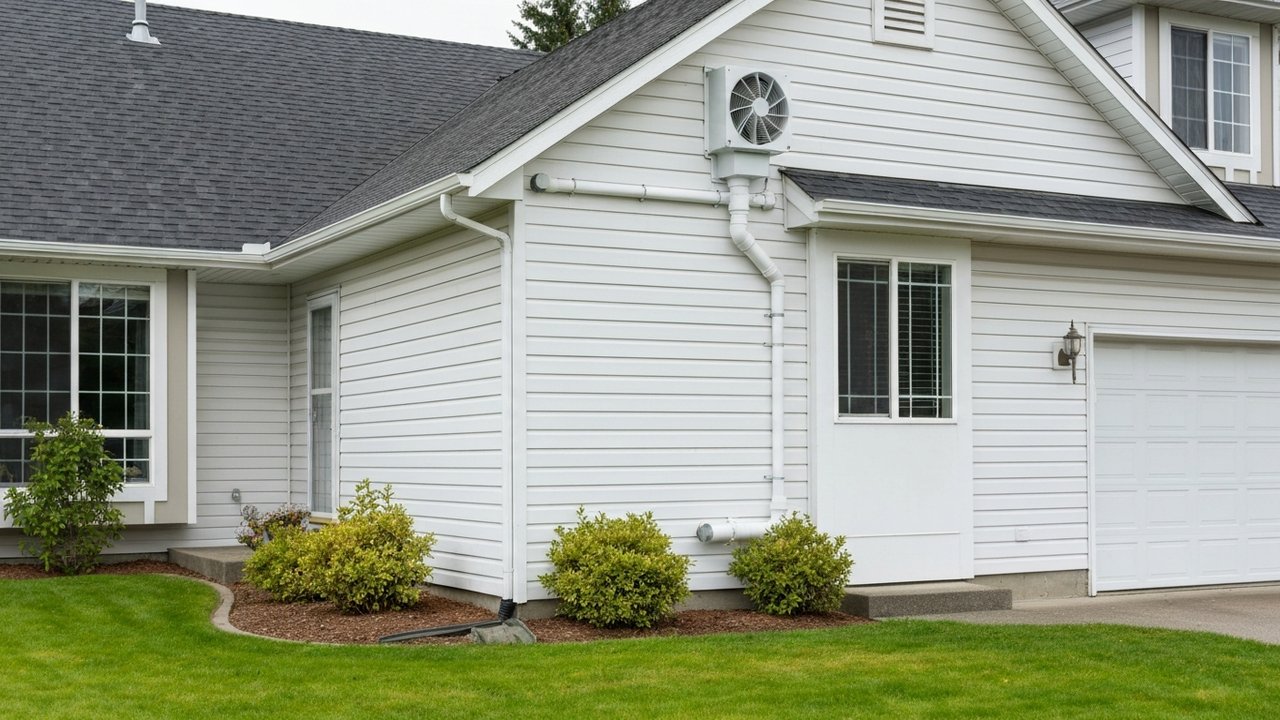
It feels backward at first. You are touring homes, everything looks great, and then you spot a white PVC pipe running up the side of the house with a small fan attached. The instinct is to worry. In reality, that pipe means the previous owners did the right thing.
Radon is a naturally occurring radioactive gas that seeps up from the soil. The U.S. Environmental Protection Agency (EPA) recommends that homeowners take action to reduce radon when a test shows levels at or above 4 picocuries per liter (pCi/L). A mitigation system is the standard fix, and a properly designed one routinely brings levels well below that threshold.
So a home with a system is a home where radon was measured and addressed. Compare that to the much larger number of homes that have never been tested at all, where you simply do not know the level. If you want to understand the gas itself, our overview of what radon is and whether it is dangerous walks through the basics.
What to ask the seller for
A real system comes with a paper trail. Before you get attached to the house, request the following through your agent.
- The post-mitigation test results. After a system is installed, the contractor performs a follow-up radon test to confirm it actually lowered the level. Ask to see that report. You want to see a result comfortably below 4 pCi/L.
- The installer documentation and invoice. This shows who did the work, when, and what kind of system it is (most commonly active soil depressurization with a fan).
- The contractor’s certification. Quality radon work in the U.S. is done by professionals certified through AARST-NRPP (the National Radon Proficiency Program, the credentialing division of the Indoor Environments Association, formerly AARST). Certified installers are required to follow the applicable ANSI/AARST consensus standards. A named, certified installer is a strong signal the job was done to standard rather than by a handyman.
- Any warranty or maintenance records. Fans typically last years but are not forever, so a record of fan replacements or service is useful.
If the seller cannot produce any of this, the system is not automatically bad. It just means you lean harder on your own fresh test, covered below.
Confirm the system is actually running
You do not need to be a technician to do a basic check. Two things tell you a lot.
First, find the manometer. Almost every active radon system has a small U-shaped tube partly filled with colored liquid, usually mounted on the vent pipe in the basement or garage. If the fan is pulling suction, the liquid levels on the two sides of the U will sit at different heights. If both sides are level and equal, the fan may have failed and the system is not working. This gauge is the system’s built-in warning device, so a quick glance gives you real information.
Second, listen and feel for the fan. The fan is usually mounted outdoors or in an attic on the vent pipe. A faint hum or a slight vibration on the pipe means it is spinning.
A failed fan is not a deal killer. Replacement fans are a relatively modest repair, and you can ask the seller to fix it before closing. Our guide to radon mitigation cost breaks down what fans and full systems run, so you know whether a quote is reasonable.
Always run a fresh test anyway
Here is the single most important step, and it applies even when the paperwork is perfect: get your own short-term radon test during the inspection period.
Why retest a home that already has a system? A few reasons. Fans wear out. Homes settle and crack. Renovations, finished basements, and new HVAC work can all change how air and soil gas move through a house. A test that passed five years ago does not guarantee today’s number. The EPA recommends retesting a mitigated home about every two years for exactly this reason, and a sale is the perfect moment to get a current reading.
You can use an inexpensive kit or hire a certified measurement professional. Our walkthrough on how to test your home for radon explains the difference between short-term and long-term tests and how to place a device correctly. For a sale, a short-term test placed in the lowest livable level usually fits the inspection timeline.
What if the new test comes back high
Occasionally a retest on a mitigated home reads above 4 pCi/L. Try not to panic. It usually points to a fixable issue, often a dead or weak fan, a disconnected pipe, or a system that was undersized for the house.
This is a negotiation point, not a reason to walk away. Common outcomes buyers and sellers reach include:
- The seller pays to have the existing system serviced or the fan replaced, then re-tests to confirm it passes before closing.
- The seller credits you at closing to cover the repair.
- The price is adjusted to reflect the work needed.
Who pays is not fixed by law in most places; it is whatever the two parties agree to in the contract. Because radon is a known, well-understood, and treatable issue, sellers are often willing to address it rather than lose a buyer.
Radon and real estate disclosure
Disclosure rules vary by state, so this is general information and not legal advice. Many states require sellers to disclose known radon test results or the presence of a mitigation system on a property disclosure form, and federally, sellers and landlords are generally expected to share known radon information with buyers and renters. A home that already has a documented system and test results actually makes disclosure cleaner, because the history is on paper instead of unknown.
Does a system hurt resale value
No. A mitigation system does not stigmatize a home or drag down its value. If anything, it is a feature: the radon question has been answered and resolved, and the next buyer inherits a working system. Buyers who understand radon tend to view a documented, functioning system as a plus. You can think of it the same way you would a newer roof or an updated furnace. It is a problem already taken care of.
The bottom line
An existing radon mitigation system should reassure you, not scare you off. Confirm the paperwork, glance at the manometer, run a fresh short-term test during your inspection period, and treat any high reading as a routine negotiation item. Do that and you are buying a home where the radon question has already been asked and answered, which is more than most buyers can say. If you want to go deeper before your inspection, start with our home radon testing guide.
FAQ
Is it safe to live in a house with a radon mitigation system? When a system is installed correctly and running, it is designed to keep radon below the EPA’s 4 pCi/L action level. Confirm it is working with the manometer and a fresh test, and the home should read low.
Should I still test if the seller shows me old radon results? Yes. Past results are useful history, but they do not reflect today’s conditions. Fans fail and homes change, so get a current short-term test during your inspection period regardless of what the old paperwork says.
Who pays if the radon test during the sale comes back high? There is no fixed rule; it is negotiated in the contract. Sellers commonly agree to service the system, replace a failed fan, or offer a credit, because radon is a known and treatable issue.
Does a radon mitigation system lower the value of a home? No. A documented, working system shows the radon question has been addressed. Most informed buyers see it as a benefit, similar to a recent furnace or roof, not a defect.
Not sure where your home stands? Try the free Radon Risk Calculator to see what your level means and what to do next.
The only way to know your radon level is to test
Radon is invisible and odourless, and the only way to know your home's level is a test. An inexpensive home test kit is the simplest place to start. See our picks and how to read the result.
See the best radon test kits →